@HowicuredAI gather all possible things that can be done to regenerate the pancreas so that insulin is no longer needed in type 1 diabetes
Below I’m collecting everything I managed to find in Howicured books + in research and conventional medicine about regeneration of the pancreas / beta cells in type 1 diabetes. At the end you can ask for a “mega answer” – then I’ll expand each point with the maximum amount of detail.
1. What the Howicured books say (natural approach)
From the books I found (excerpts in the forum materials):
1.1. “Timeless Secrets of Health and Rejuvenation – Andreas Moritz”
Main ideas (re: diabetes and the pancreas):
- Diabetes (both type 1 and 2) is, according to the author, largely reversible if:
- the causes of beta‑cell damage are removed (toxicity, poor diet, stress, congestion in the liver, intestines, lymph),
- proper circulation, nourishment, and detoxification of the pancreas are restored.
- The author strongly emphasizes:
- liver and gallbladder cleansing (flushes),
- improving digestion (bile, enzymes, gut flora),
- a whole‑food, plant‑based, minimally processed diet,
- reducing medications that burden the liver and pancreas (but always under a doctor’s supervision),
- working with emotions (stress, fear, sense of threat – their impact on the pancreas and nervous system).
- He explicitly writes that:
- pancreatic cells can regenerate if we stop destroying them (diet, toxins, stress),
- purely symptomatic treatment (insulin without lifestyle change) perpetuates the disease and complications.
Source: “Timeless Secrets of Health and Rejuvenation – Andreas Moritz”
1.2. Books on plant‑based / anti‑inflammatory diet
In the materials there are excerpts from brochures and books about:
- whole‑food plant‑based diet,
- anti‑inflammatory diet (lots of vegetables, fruits, whole grains, nuts, seeds, spices like turmeric, ginger, cinnamon),
- avoiding:
- trans fats and refined oils,
- processed meat,
- large amounts of dairy,
- refined sugar and white flour.
Recommendations from these books:
- improved insulin sensitivity (more typical for type 2, but this also takes load off the pancreas),
- reduced inflammation throughout the body (including in the pancreas),
- better body weight, blood pressure, lipids – which improves blood flow and nourishment of the pancreas.
Sources (example excerpts):
- a brochure on plant‑based diet (no title in the quote, but a typical “plant‑based guide”),
- “The 80/10/10 Diet – Douglas N. Graham” (excerpts about simple, low‑fat, plant‑based eating, without supplements and “superfoods”).
1.3. Books about “causes of health”, not disease
From the quoted excerpts (e.g. “The 80/10/10 Diet – Douglas N. Graham”):
- emphasis on:
- simple, natural diet (mainly fruits, vegetables, some nuts/seeds),
- avoiding processed foods, supplements, “superfoods”,
- movement, sleep, sun, stress reduction,
- trust in the body’s regenerative abilities.
- The author claims that:
- the body can reverse even “incurable” diseases if it gets the right conditions (fuel, rest, lack of toxins),
- obsession with weight / symptoms without caring for true health leads to further damage (including to the pancreas).
Source: “The 80/10/10 Diet – Douglas N. Graham”
1.4. Books on “diabetes as a symptom of general metabolic disorder”
From excerpts of “Timeless Secrets…”:
- Diabetes is treated as:
- a manifestation of a general metabolic disorder and “poisoning” of the body,
- an effect of poor nourishment of cells (including the pancreas) and chronic inflammation.
- The author gives examples of:
- possible pancreatic regeneration,
- the impact of simple substances (e.g. capsaicin from chili peppers) on pancreatic nerves and improvement of its function (based on mouse studies).
Source: “Timeless Secrets of Health and Rejuvenation – Andreas Moritz”
2. What modern medicine / research say (internet, publications)
Here I summarize what is in scientific studies and reviews (after 2020) on pancreatic regeneration in T1D. This is NOT yet standard clinical practice, but it shows directions.
2.1. Islet / pancreas transplantation
- Islet transplantation:
- islets are taken from a donor pancreas and transplanted into the recipient (most often into the liver),
- some patients achieve temporary insulin independence (months–years),
- requires strong immunosuppression (drugs that suppress the immune system),
- risks: infections, cancers, drug toxicity.
- Whole pancreas transplantation:
- usually together with kidney transplantation,
- can provide many years of normoglycemia without insulin,
- major surgery, high risk, immunosuppression required.
These are currently the only methods in clinical practice that can practically “replace” the pancreas and temporarily free from insulin.
Example sources:
- Shapiro AMJ et al., “Islet transplantation in type 1 diabetes: ongoing challenges, refined procedures, and long-term outcome”, Lancet Diabetes Endocrinol.
- Gruessner AC, “Pancreas transplantation: indications and outcomes”, Curr Opin Organ Transplant.
2.2. Stem cell therapies
Research directions:
-
Pluripotent stem cells (iPSC / ESC) differentiated into beta cells
- Companies and centers (e.g. Vertex, ViaCyte) are conducting clinical trials:
- lab‑generated beta cells are transplanted into patients,
- some patients reduce insulin doses, some temporarily do not need it,
- problem: the immune system can still destroy them → need for immunosuppression or encapsulation.
- Companies and centers (e.g. Vertex, ViaCyte) are conducting clinical trials:
-
Mesenchymal stem cells (MSC)
- administered intravenously or locally,
- they have:
- immunomodulatory effects (attenuating autoimmunity),
- potential to support tissue regeneration,
- study results:
- in some patients: reduced insulin requirements, better glycemic control,
- effect often partial and temporary.
Example sources:
- Shapiro AMJ et al., “Stem cell–derived beta cells for type 1 diabetes”, Cell Stem Cell.
- Carlsson PO et al., “Mesenchymal stromal cells in type 1 diabetes”, Diabetologia.
2.3. Immunotherapy (stopping autoimmunity)
The goal is to stop the immune attack on beta cells in order to:
- preserve residual pancreatic function,
- enable possible regeneration / rebuilding.
Examples:
- Teplizumab (anti‑CD3 antibody)
- approved in the USA to delay the onset of T1D in high‑risk individuals,
- in newly diagnosed T1D it can:
- prolong the “honeymoon period”,
- preserve some endogenous insulin production (C‑peptide).
- Other studies:
- anti‑TCR, anti‑CD20 (rituximab) vaccines,
- anti‑TNF therapy,
- anti‑GAD65 vaccines,
- combinations of immunotherapy with stem cells.
So far this is mainly clinical research; in practice: they can slow pancreatic destruction, but rarely completely free from insulin.
Sources:
- Herold KC et al., “Teplizumab (anti-CD3 mAb) for prevention and treatment of type 1 diabetes”, N Engl J Med.
- Battaglia M et al., “Immunotherapy in type 1 diabetes: current and future perspectives”, Diabetologia.
2.4. Drugs stimulating regeneration / protection of beta cells
Various substances are being studied:
- kinase inhibitors (e.g. DYRK1A inhibitors),
- GLP‑1 agonists (liraglutide, semaglutide) – mainly in type 2, but:
- may have protective effects on beta cells,
- improve glycemic control, reduce insulin requirements (off‑label in T1D in studies).
- SGLT2 inhibitors – reduce pancreatic load by excreting glucose in urine (but in T1D there is a risk of ketoacidosis).
As of today: there is no drug that routinely regenerates the pancreas in T1D to the level of full insulin independence.
2.5. Research on “reprogramming” other cells into beta cells
- Attempts to convert:
- pancreatic alpha cells,
- pancreatic duct cells,
- and even liver cells
into beta cells via: - transcription factors (Pdx1, MafA, Ngn3),
- small molecules.
- So far mainly animal models; in mice it has been possible to:
- partially restore insulin production,
- stabilize glycemia without exogenous insulin.
Sources:
- Zhou Q et al., “In vivo reprogramming of adult pancreatic exocrine cells to beta-cells”, Nature.
- Pagliuca FW et al., “Generation of functional human pancreatic beta cells in vitro”, Cell.
2.6. Lifestyle, diet, supplements – what studies show
Here the studies are more indirect (often on type 2, but some conclusions also apply to protection of residual beta cells in type 1):
-
Anti‑inflammatory / plant‑based diet
- less inflammation, better insulin sensitivity,
- potentially slower loss of beta‑cell function,
- better glycemic control with lower insulin doses.
-
Physical activity
- improved insulin sensitivity,
- lower insulin doses → smaller glycemic swings → less oxidative stress for the pancreas.
-
Vitamin D, omega‑3 fatty acids, magnesium, zinc
- correlations between deficiencies and T1D risk,
- supplementation can:
- modulate the immune system,
- reduce inflammation,
- but it is not a “drug” in itself.
-
Gut microbiota
- microbiota disturbances linked to autoimmunity,
- probiotics, prebiotics, high‑fiber diet can:
- improve gut barrier,
- modulate immunity,
- potentially affect the course of T1D (research ongoing).
3. What “natural” sources vs. conventional medicine say – differences
3.1. Natural books (like “Timeless Secrets…”, “80/10/10”)
- They claim that:
- even type 1 can be reversed if:
- the body is cleansed (liver, intestines, lymph),
- one switches to a very natural diet (often raw, plant‑based),
- stress is reduced, sleep and movement are improved,
- toxins are removed (heavy metals, chemicals, medications, vaccinations as potential triggers).
- even type 1 can be reversed if:
- They emphasize:
- the body never “attacks itself” without a reason,
- autoimmunity is a defense mechanism against toxins / poor lifestyle,
- after removing the causes, the body can rebuild the pancreas.
3.2. Conventional medicine
- Recognizes T1D as:
- a chronic autoimmune disease,
- currently incurable – requires lifelong insulin.
- Accepts:
- the possibility of partial regeneration / preservation of beta‑cell function (especially early after diagnosis),
- temporary insulin independence after transplants / experimental therapies,
- but does not speak of “routine cure” and full pancreatic regeneration.
4. List of “all possible things” that appear in the sources
This is a combined list – it does NOT mean that everything is proven or safe. Some are clinical trials, some are concepts from natural books.
4.1. From the level of conventional medicine / research
- Islet transplantation.
- Pancreas transplantation (often with kidney).
- Stem cell therapies:
- iPSC/ESC → beta cells,
- MSC (mesenchymal) – immunomodulation + regeneration support.
- Immunotherapy:
- teplizumab (anti‑CD3),
- other antibodies (anti‑CD20, anti‑TNF),
- anti‑GAD65 vaccines, combinations.
- Drugs supporting / protecting beta cells:
- GLP‑1 agonists (off‑label),
- DYRK1A inhibitors and other molecules in studies.
- Attempts to reprogram other cells into beta cells (so far mainly animals).
- Intensive, early glycemic control:
- minimizing “glucotoxicity” and “lipotoxicity”,
- protecting residual beta cells.
4.2. From the level of lifestyle / diet (research + books)
- Whole‑food, plant‑based, minimally processed diet:
- lots of vegetables, fruits, whole grains, legumes, nuts, seeds,
- little / no: processed meat, refined oils, sugar, white flour.
- Sources: plant‑based diet brochures, “The 80/10/10 Diet – Douglas N. Graham”.
- Anti‑inflammatory diet:
- turmeric, ginger, cinnamon, berries, leafy green vegetables, omega‑3,
- limiting trans fats, frying, fast food.
- Maintaining healthy body weight:
- reduces insulin resistance,
- takes load off the pancreas.
- Regular physical activity:
- aerobic + strength training,
- improved insulin sensitivity, lower insulin doses.
- Sleep and circadian rhythm:
- 7–9 h of sleep, regular hours,
- less hormonal stress (cortisol), better glycemic control.
- Stress reduction:
- meditation, breathing, psychotherapy, emotional work,
- in the books (e.g. Moritz) – strong emphasis on emotions as a factor in autoimmunity.
- Supplements (from studies and books):
- vitamin D (if deficient),
- omega‑3 (EPA/DHA),
- magnesium, zinc,
- probiotics / prebiotics (gut microbiota),
- anti‑inflammatory herbs (turmeric, ginger, green tea – in books and partly in studies).
- Working on gut microbiota:
- high‑fiber diet,
- fermented foods (if tolerated),
- avoiding unnecessary antibiotics.
4.3. From the level of “natural protocols” (books like Moritz, 80/10/10, etc.)
- Liver and gallbladder cleansing (flushes).
- Intestinal cleansing (fiber, herbs, sometimes enemas).
- Limiting / discontinuing (under medical supervision) drugs that burden the liver and pancreas.
- Diet:
- very simple, natural, often high‑raw, plant‑based,
- lots of fresh fruits and vegetables, low fat (80/10/10).
- Avoiding:
- processed foods,
- artificial additives, sweeteners, colorants,
- excess animal protein and dairy.
- Detoxification:
- sauna, movement, hydration (1–2 l of water a day, in some books even 1 gallon),
- herbs supporting liver, kidneys, lymph.
- Working with emotions:
- forgiveness, reducing fear, changing beliefs about “incurability”,
- authors emphasize that the body is not “broken”, it is defending itself.
Sources:
- “Timeless Secrets of Health and Rejuvenation – Andreas Moritz”
- “The 80/10/10 Diet – Douglas N. Graham”
- other excerpts from books on plant‑based / anti‑inflammatory diet from the forum materials.
5. How to summarize all this honestly
- From the point of view of official medicine:
- today there is no standard, widely available method that guarantees full pancreatic regeneration in T1D and permanent discontinuation of insulin,
- there are:
- transplants (islets / pancreas),
- cell and immunological therapies in research,
- lifestyle measures that can protect residual beta cells and improve glycemic control.
- From the point of view of natural books:
- the body has the potential for full regeneration if:
- the causes are removed (toxicity, poor diet, stress, organ congestion),
- optimal conditions are created (diet, movement, sleep, emotions, cleansing),
- there are case descriptions of reversal of even “incurable” diseases, including diabetes.
- the body has the potential for full regeneration if:
If you want, I can now prepare a “mega answer” in which:
- I’ll lay out step by step a possible protocol:
- what can be done right now (diet, lifestyle),
- which studies / therapies are worth following (stem cells, immunotherapy),
- how to combine the natural and conventional approach in order to:
- maximally protect and support the pancreas,
- minimize insulin doses,
- avoid acute complications (DKA, severe hypoglycemia).
- and for each point I’ll state whether it comes from:
- books (with title),
- scientific studies,
- clinical practice.
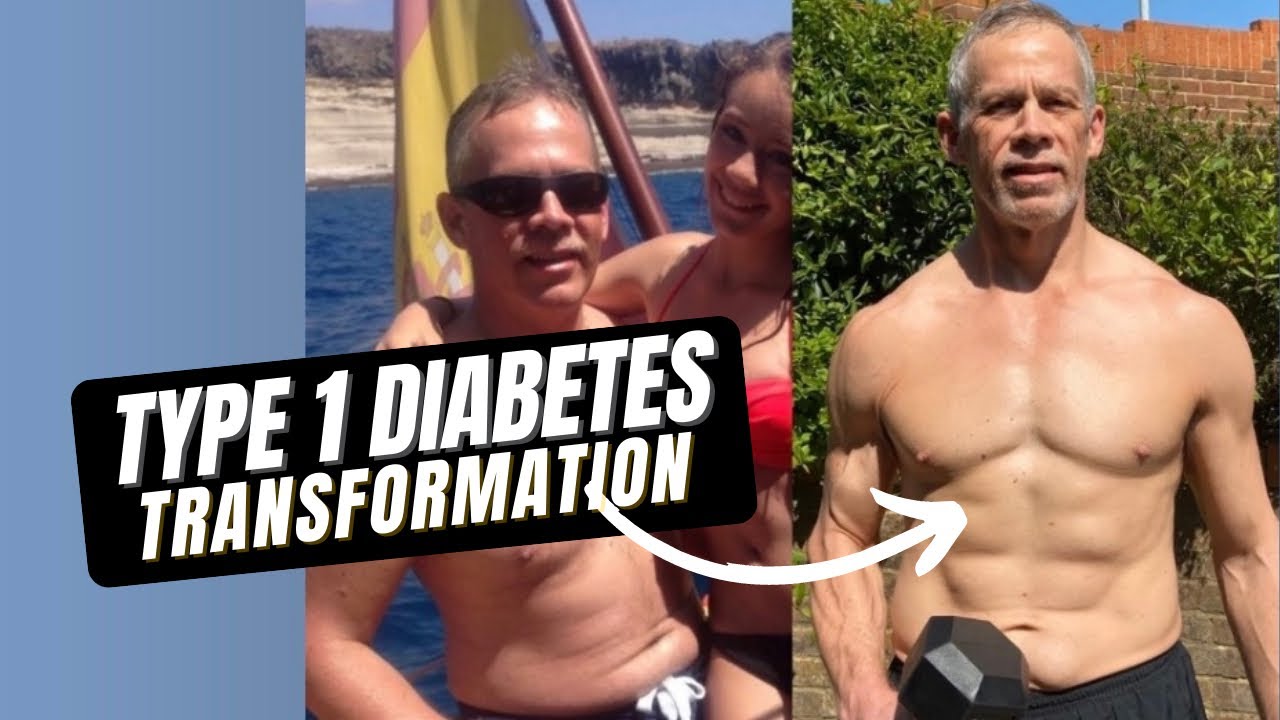
I’ll add one of the testimonies from recovered patients on YouTube, which emphasizes how thin the line is between type 1 and type 2. This gentleman claims that he was diagnosed with type 1 diabetes and managed to cure it (and in the process got himself a six-pack).
When I once took my mom to the mountains for a 5‑hour hiking trip (type 1 diabetes diagnosed at the age of 65…) she also had a problem, because her blood sugar kept dropping to zero. Without insulin, before the diabetes was detected, it would shoot up to over 500…
However, despite the drop in blood sugar she didn’t want to stop taking insulin injections… instead she kept snacking on fudge candies to raise it… I admire all those who do try to gradually come off their medications, monitoring how increased physical effort affects their health.
Regarding the claim that the pancreas doesn’t regenerate – I personally saw a case of a person on dialysis 3 times a day for 20 years who, after switching to a diet of only mangoes, started to have such improved test results that they no longer qualified for further dialysis. They started to feel as good as possible. However, they didn’t stop taking more than 19 different pills a day, and at some point they began to feel terrible. Instead of stopping the medications, they went to the doctors. The same ones who had put them on dialysis from the age of 20 (basically their problems came from a misdiagnosed case of chickenpox, for which they were given antibiotics at the age of 12, and after that they never got out of the spiral of endless treatment…).
Unfortunately, when the doctors found out that they were eating only fruit, they all ganged up on them and ordered them to eat bread rolls with butter, ham, and cheese “because after all they need proteins!!!” 3 times a day. And so they obediently returned to their original state. Stockholm syndrome.
My mother also “knows better” and stuffs herself with meat, butter, and cheese, because “it’s healthy and people have always eaten it.” And that diabetes at 65 just fell on her from outer space…